

|
CPE Credits : 2 (NASBA/ICAEA)
|
Level : Intermediate
|
|
|
Subject Area : Computer software and applications
|
Place : online
|
|
|
Instructional Method : QAS Self-Study
|
Price : 200 USD
|
|
|
Prerequisites : A basic understanding of auditing principles and general ledger systems.
|
Advance Preparation : None.
|
|
|
Who Should Attend : It is suitable for individuals seeking to enhance their skills and knowledge in applying AI technology in auditing.
PS: Participants are required to complete the final examination within one year of the date of purchase. |
||
 Course Description
Overview :
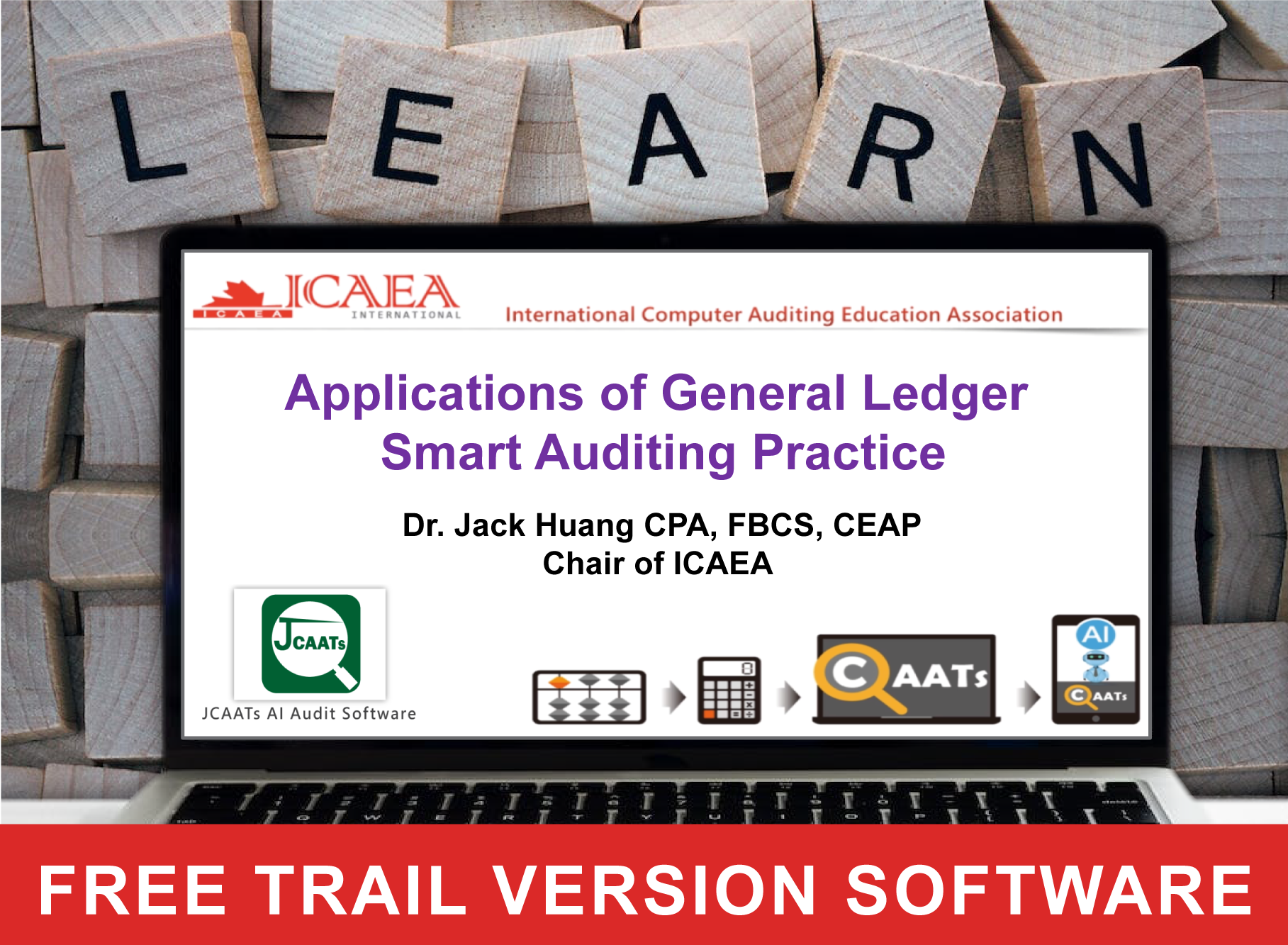
The course is designed to guide you through experimenting with real-world smart auditing scenarios for General Ledger audits in a step-by-step process. It provides participants with comprehensive training in utilizing the latest advancements in audit technology, specifically focusing on the Applications of General Ledger Smart Auditing Practice. Leveraging JCAATs - AI Audit Software, participants will gain hands-on experience and practical knowledge in conducting efficient and effective computer audits of AICPA Audit Data Standard for General Ledger.
Course Objectives :
1. Identify the fundamental concepts of smart auditing for the General Ledger.
2. Recognize the key audit analytic steps for ensuring General Ledger account accuracy.
3. Recognize the key audit analytic steps for ensuring the timeliness of General Ledger postings.
4. Recognize the key machine learning steps for detecting unusual entry amounts.
5. Recognize the key text mining steps for identifying unusual description words in entries.
6. Recognize the key audit steps for detecting phantom General Ledger accounts.
Course Topics :
1. Introducing Real-World Smart Auditing Scenarios for General Ledger Audits.
2. Beginning Your Audit Data Analytics for General Ledger Assessments.
3. Exploring the Timeliness of General Ledger Postings.
4. Implementing Machine Learning to Detect Unusual Entry Amounts.
5. Utilizing Text Mining to Identify Unusual Description Words in Entries.
6. Best Practices in Accounting Transaction Record Compliance Audits.
*First Name:
*Last Name:
*Email:
* denotes field is required
Title:
*First Name:
*Last Name:
*Email:
*Mobile Phone
*Country:
*City :
State/Province:
Zip:
*Address:
*Organization/Company Name:
Job Title:
 Course Description